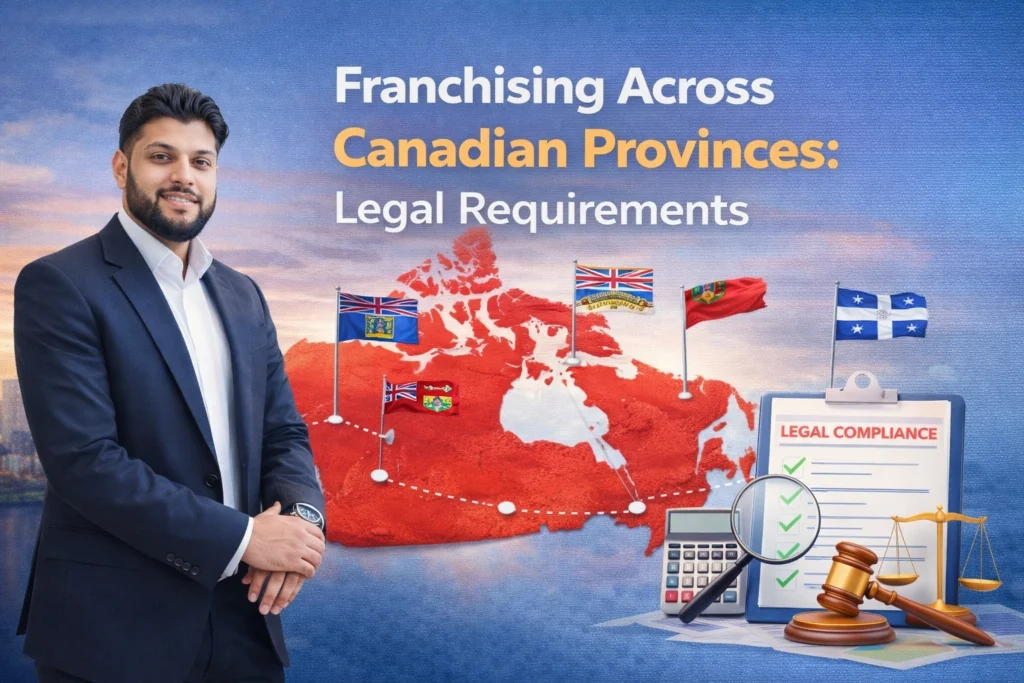
When you’re considering expanding your franchise across Canada, one of the most crucial steps is ensuring you understand the legal requirements that vary from province to province. Canada has a diverse legal landscape for franchises, with each region having its own set of rules and regulations. Selecting the right law firm experienced in handling multi-province franchise expansion is key to ensuring that your business complies with all necessary legal standards.
Key Takeaways:
By the end of this article, you’ll know how to:
- Navigate franchise law and understand legal requirements for expanding across multiple provinces.
- Find a law firm that specializes in multi-province franchise law.
- Understand key differences in franchise disclosure documents (FDD) across Canadian regions.
- Select the right franchise lawyer for your expansion needs.
- Avoid common legal pitfalls that could delay or hinder your franchise’s growth.
What is Franchise Law and Why is it Crucial for Multi-Province Expansion?
Franchise law governs the relationship between franchisors and franchisees. It includes all legal aspects of operating a franchise, from franchise agreements to disclosure documents, and ensures both parties are protected. Franchise law is particularly important when expanding your franchise across multiple provinces in Canada, as each region has its own rules and regulations that must be followed.
The primary goal of franchise law is to ensure transparency and fairness for both franchisors and franchisees. It covers everything from protecting intellectual property to making sure that franchisees have the right to make informed decisions based on a clear, legally-compliant disclosure document.
When expanding across multiple provinces, understanding regional legal variations is essential. For instance, Ontario’s Arthur Wishart Act mandates strict franchise disclosure practices, while Quebec has different consumer protection laws that affect the structure of agreements. Therefore, it is crucial to select a firm with multi-province expertise.
What Are the Key Legal Requirements for Expanding a Franchise in Canada?
The legal requirements for franchising across Canada differ from province to province. Some provinces have mandatory franchise registration, while others simply require compliance with federal and provincial laws.
Ontario: Ontario follows the Arthur Wishart Act, which mandates that franchisors provide franchise disclosure documents (FDD) at least 14 days before signing any agreement. This ensures the franchisee has sufficient time to review and seek advice.
Quebec: While Quebec doesn’t have the same cooling-off period, its consumer protection laws are among the strictest. Franchise agreements must be clearly written in French and contain all relevant terms, including fees, obligations, and rights of the franchisee.
British Columbia & Alberta: These provinces have more basic franchise laws, but still require compliance with franchise agreements, FDDs, and local consumer protection rules.
Each province also has different rules regarding disclosure documents, tax obligations, and franchise registration. Therefore, choosing a firm with experience across multiple jurisdictions ensures that you meet all legal requirements in every province you wish to expand into.
Franchise Disclosure Documents (FDD) by Region
Franchise Disclosure Documents (FDDs) are essential for ensuring that franchisees understand their rights and obligations before entering into an agreement. The contents and timing of the FDD can vary depending on the region:
| Province | FDD Requirements | Filing Time |
| Ontario | Arthur Wishart Act requires full disclosure 14 days before agreement | 14 days before signing |
| Quebec | Requires detailed information and language requirements | Varies, usually 30 days |
| BC/Alberta | No mandatory cooling-off period, but disclosure is still required | Typically 7-14 days |
Ensuring compliance with provincial laws is essential, as missing out on providing the correct disclosure documents could delay or derail your expansion efforts. Franchise law firms experienced in these differences can guide you through the disclosure process efficiently.
How to Choose the Right Franchise Lawyer for Multi-Province Expansion
When expanding your franchise, selecting the right franchise lawyer can make all the difference. Here’s what you need to look for when choosing a lawyer for multi‑province expansion:
Experience in multi‑province franchise law: Your lawyer should be experienced in handling franchise operations across different provinces. This will ensure that they understand the regional differences in franchise regulations and how they apply to your business.
Fixed‑fee pricing: Transparent pricing is crucial for budgeting your franchise expansion. Look for law firms that provide fixed-fee pricing models for franchise-related services, avoiding unexpected costs.
Industry expertise: Ensure the lawyer has experience in your specific industry, whether it’s restaurant franchising, retail, or MSBs. Industry knowledge will help them navigate industry-specific regulations and ensure your documents and agreements are in line with the industry norms.
By working with a lawyer who specializes in multi-province franchise law, you can avoid costly mistakes and delays in your franchise expansion journey.
Common Legal Pitfalls in Franchise Expansion and How to Avoid Them
Expanding a franchise across Canada comes with its own set of legal pitfalls. Avoiding these common mistakes will save you time, money, and legal headaches:
Non-compliance with provincial laws: Failing to meet regional franchise laws can result in penalties or the delay of your franchise expansion. Ensure your franchise agreements and FDDs comply with provincial requirements to avoid issues.
Incomplete or inaccurate franchise disclosure documents: Disclosure documents must be accurate, complete, and up-to-date. Ensure that your FDD includes all legally-required information, including financial projections, franchisee obligations, and dispute resolution procedures.
Missed franchise registration deadlines: Certain provinces require franchise registration before you can sell franchises. Failing to meet these deadlines can result in financial penalties or being unable to legally expand.
Working with an experienced franchise lawyer who is well-versed in multi‑province expansion will help you avoid these common pitfalls.
Why Choose Cloudhaus Law?
Cloudhaus Law offers over 20 years of experience in franchise law with a strong focus on multi‑province expansion. Our team of experts provides hands-on legal support, ensuring your franchise complies with the legal requirements of each province, from Ontario to British Columbia. We offer fixed‑fee pricing, so you can plan your expansion with confidence and avoid unexpected costs.
FAQs Section
What are the legal requirements for franchising in Canada?
Canada has a range of legal requirements for franchise operations, including franchise disclosure documents (FDD) and province-specific regulations. Each province has its own disclosure rules, so it’s important to work with a lawyer who understands the local laws.
How do I choose a franchise lawyer for multi‑province expansion?
Look for a lawyer with experience in multi‑province franchise law who offers transparent, fixed‑fee pricing. They should be familiar with the specific franchise laws in each province.
What does a franchise disclosure document contain?
An FDD includes all the necessary information a franchisee needs to make an informed decision, such as fees, obligations, risks, and terms of the agreement.
How do franchise laws differ in Ontario, Quebec, and BC?
Ontario has the Arthur Wishart Act, which mandates a 14-day disclosure period. Quebec has more stringent consumer protection laws and requires agreements in French. BC and Alberta have more basic franchise regulations.
What is the cost of franchise legal services in Canada?
Costs vary based on services required. Many firms offer fixed-fee pricing for common franchise services like disclosure documents and contract negotiations.
Can I expand my franchise into multiple provinces?
Yes, but each province has its own set of legal requirements. It’s essential to understand these differences and work with a franchise lawyer who has experience in multiple regions.
What happens if I miss a franchise disclosure deadline?
Missing a disclosure deadline could result in penalties, delayed expansion, or the inability to legally sell franchises in certain provinces.
How do I ensure compliance across provinces?
Work with a franchise law firm experienced in multi‑province compliance. They can help you navigate province-specific regulations and ensure your FDD and agreements are legally compliant.
What are the consequences of not following franchise law in Canada?
Non-compliance can result in legal disputes, penalties, and delays in expansion. It’s crucial to ensure your franchise complies with all regional laws.
How can Cloudhaus Law assist with franchise expansion?
Cloudhaus Law provides comprehensive legal support for multi‑province franchise expansions, ensuring your business is fully compliant with regional regulations.
Conclusion & CTA
Expanding your franchise across multiple provinces in Canada is a complex process that requires expert legal advice. At Cloudhaus Law, we specialize in multi‑province franchise law and offer fixed‑fee pricing to ensure you can confidently navigate the legal landscape. Contact Cloudhaus Law today for a consultation on your franchise expansion needs.